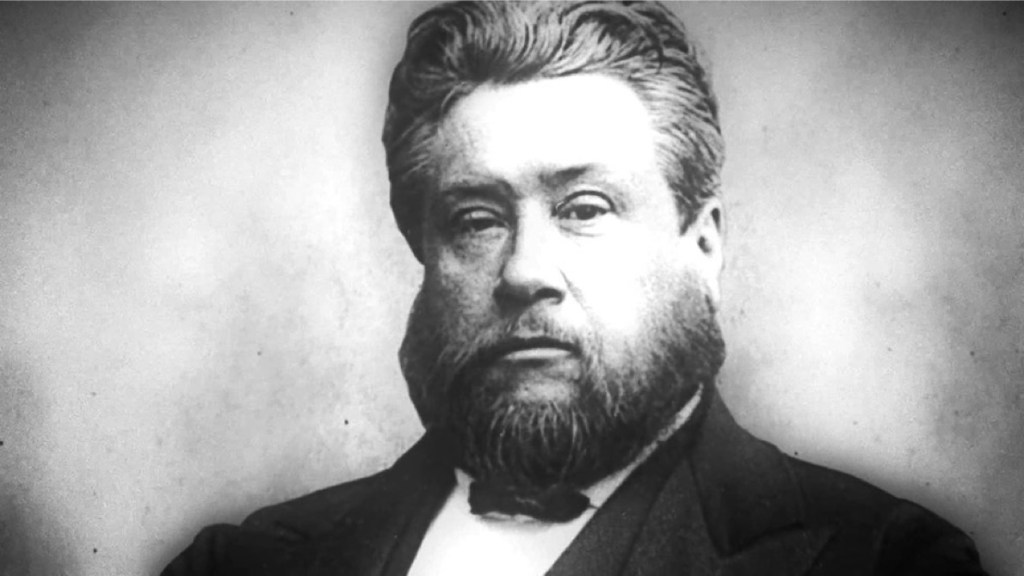
Next year will mark the 130th anniversary of the death of one of Christian History’s most famous preachers. Many pastors and preachers have read, heard, or own copies of Spurgeon’s sermons. He was renowned as “the Preacher’s Preacher,” though he was not exactly an “original thinker,” bible scholar, or theologian, but his role as a proclaimer of the Gospel is unquestionable.
Charles Hadden Spurgeon was born June 19, 1834, in Kelvedon, Essex, United Kingdom, to a family of Christians ministers of the “Nonconformist” brand (meaning he was not a part of the Anglican\Church of England). His father and grandfather were both Gospel preachers with limited education but firefly rebukes of the Roman Catholic and Anglican Churches. Nonetheless, with little education and experience, Spurgeon heard the Gospel preaching of Baptist groups in England (Particular and English General Baptists) and joined a Baptist Church at the age of 15 on January 6, 1850. Later he was later baptized in the Lark River, Isleham, on May 3, 1850.
Though he was now a full-fledged Baptist, his doctrine remained Calvinistic. When asked, Spurgeon often referred to himself as simply “I am never ashamed to avow myself a Calvinist, and I do not hesitate to take the name of Baptist, but when asked my creed, I simply reply, ‘It is Jesus Christ.’”
Essex was a community with a long tradition of Protestant resistance to the persecutions of King Henry VIII’s daughter, “bloody” Mary. From his early years, he learned to identify with those included in Foxe’s Book of Martyrs. He later recommended the book as “the perfect Christmas gift for a child.” His community and choice of reading material galvanized his passion for proclaiming the Gospel from the pulpit and the published sermons.
While still a teenager, Spurgeon began preaching in the rural communities of Cambridgeshire, England, sometime in the winter of 1850/1851. He accepted his first pastorate in Waterbeach just north of Cambridge. Biographers indicate Spurgeon was a “Preaching Boy Wonder,” whose sermons were more mature than the young man preaching them. The young Spurgeon had an excellent memory and preached his sermons without outlines or notes and presented most scriptures from memory.
Later, as Spurgeon’s popularity grew, he was invited to preach at New Park Street Chapel (now Metropolitan Tabernacle) in London. New Park Street was the largest Baptist Church in the United Kingdom, with a membership of only 232. The congregation voted to hire him as their pastor, and he remained there for 38 years. By the end of his 38-year pastorate, the membership of the congregation was 5,311, with a total of 14,460 people added to the church during the course of his tenure.
As word of his preaching spread throughout England and Spurgeon was invited to preach to some of the largest crowds in the land. So, by the age of 20, he had preached over 600 times to tens of thousands in London’s greatest venues. His largest crowd was at the Crystal Place in London on October 7, 1857, to a gathering of 23,654 persons. However, not everyone was impressed by Spurgeon.
The congregation hired a transcriptionist to record Spurgeon’s sermons and transfer them to full manuscripts. These were distributed for a penny, and most were published by newspapers throughout England. In 1865, his sermons sold 25,000 copies every week. But, while some hailed him as a great orator, others regarded him as a “demagogue” and “pulpit buffoon.” When asked about these comments, Spurgeon responded, “I am perhaps vulgar, but it is not intentional, save that I must and will make people listen. My firm conviction is that we have had enough polite preachers.”
Spurgeon was never “vulgar,” in the disrespectful sense of the word; rather, he was unpolished as the silver-tongued clerics of the Anglican pulpits. Yet, he never limited or changed his preaching. While preaching a sermon on Acts 26:28, he coined the famous quote, “Almost persuaded to be a Christian is like the man who was almost pardoned, but he was hanged; like the man who was almost rescued, but he was burned in the house. A man that is almost saved is damned.”
He was once invited to preach at the newly built Agricultural Hall (1860). The enormous center, centered in Liverpool, was an estimated 100,000 square feet of galleries, rooms, and exhibition halls. Spurgeon arrived to inspect the hall and test the acoustics of the vast room. Spurgeon is reported to have shouted, “Behold the Lamb of God who takes away the sin of the world.” A venue worker heard Spurgeon’s shout and immediately gave himself to Christ.
Spurgeon’s fame was so great he had to make requests of his congregation. During his tenure, he often asked portions of the regular members not to attend some services to allow newcomers to find seats. Biographers recorded that on two occasions, the entire congregation voluntarily emptied the sanctuary so the crowd outside could enter. Within minutes of the crowd’s exit, the sanctuary was filled again with newcomers.
Space will not adequately allow me to describe what became known as the “Down-Grade Controversy” over “new theology” that split Baptist groups in the United Kingdom. Suffice it to say, William Gladstone, the four-time Prime Minister of England and Spurgeon’s close friend, split the political party over a position on Ireland’s “home rule,” and Spurgeon broke with Gladstone’s ideology. This political split spilled over into Spurgeon’s supporters, and he found himself in an ecclesiastical split. In short, it was a very difficult and turbulent time.
The splits caused Spurgeon great spiritual and emotional pain, and it began to take its toll on him physically as well. He withdrew from the Baptist Union (association), and the Union took offense with his withdrawal. They voted to censure Spurgeon for his departure. Poetically speaking, Spurgeon came full circle; once a nonconformist, he returned to his independency, disconnected from politics and denominationalism.
Charles Haddon Spurgeon died January 31, 1892, at the age of 57 in Menton, France. Sixty thousand people came to pay their respects to him as his body lay in state at the Metropolitan Tabernacle (New Park Street Church). The funeral procession was over 2 miles long, with over 100,000 spectators standing by the roadsides. The flags were lowered to half-staff, and all of the shops and restaurants were closed.
Spurgeon did not have the advantages of wealth, education, or aristocratic pedigree. However, what he did have was a faith in a Risen Christ and a passion for proclaiming the Good News of salvation.
Bibliography
“History of the Tabernacle”. Metropolitan Tabernacle. https://www.metropolitantabernacle.org/?page=history Retrieved July 22, 2021
The Spurgeon Archive. http://www.spurgeon.org/. Retrieved July 22, 2021.
W.Y. Fullerton. Charles Haddon Spurgeon: A Biography. Electronically available on The Spurgeon Archive. http://www.spurgeon.org/misc/bio1.htm. Retrieved July 22, 2021.

 J.Hill Works, LLC